
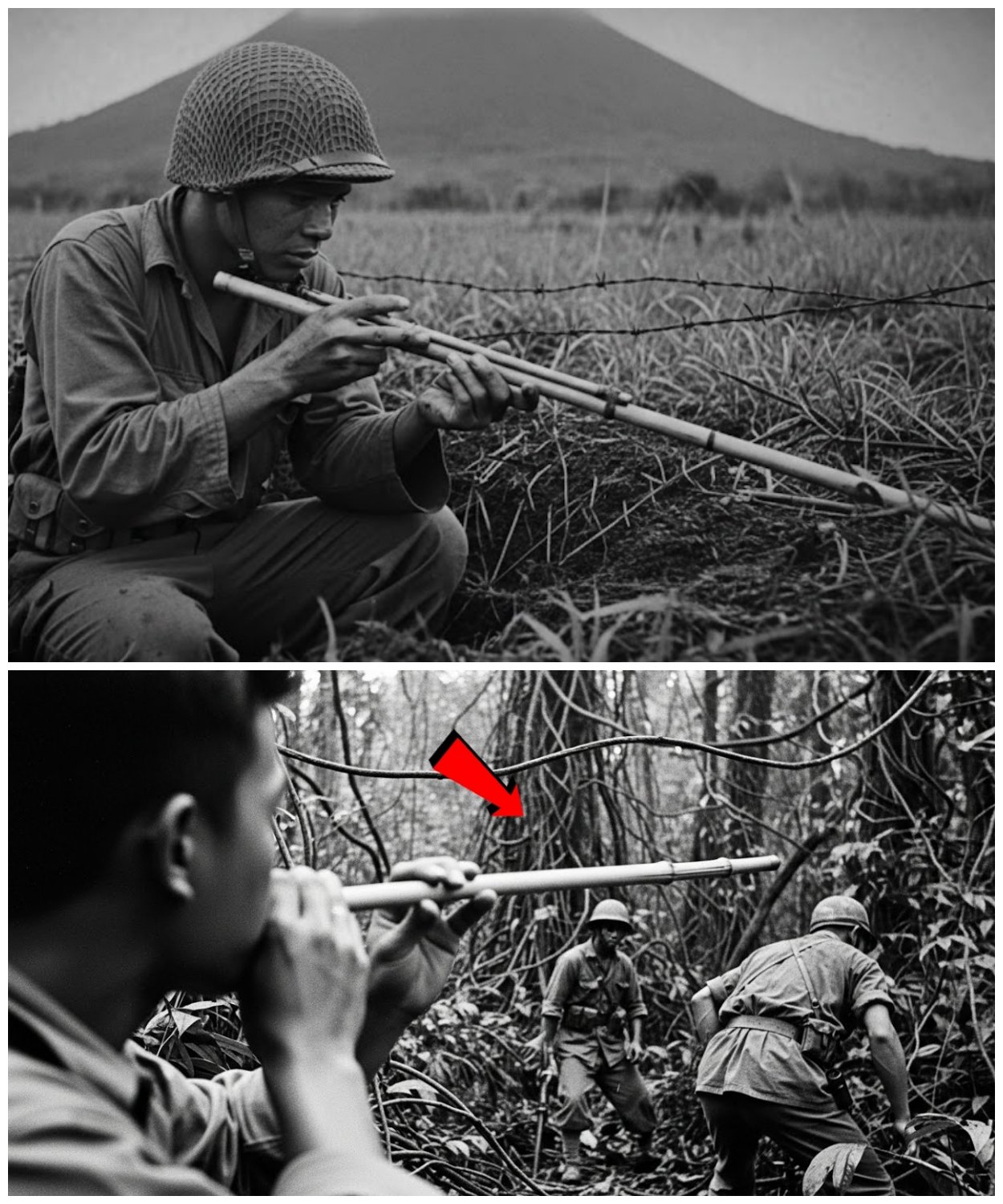
In the early morning of February 9, 1944, on a jungle-covered ridge in Bougainville, Private Edwin Macaulay quietly watched enemy movement from a concealed position in the mud and undergrowth.
He was injured, cut off from the forward line, and too far from the nearest machine-gun nest to retreat safely. With almost no support left, Edwin had to rely on calm judgment, adaptability, and the survival skills he had learned growing up.
Edwin was born in Mindanao to a Filipino mother. After losing her at a young age, he was raised by his grandfather, who taught him how to read the forest, move carefully through difficult terrain, and stay composed under pressure. Many people saw those skills as old-fashioned and irrelevant in modern war.
When Edwin joined the U.S. Army, he struggled. He did not stand out in conventional training, his English was limited, and he was often underestimated by others. Still, he endured, learned quietly, and adapted to military life.
When his unit arrived in Bougainville, they faced some of the harshest battlefield conditions imaginable: dense jungle, volcanic ground, tropical disease, exhaustion, and constant pressure from nighttime attacks. Edwin realized that he understood the jungle differently from many around him. He noticed the natural rhythm of the forest and could sense when that rhythm was disturbed.
At first, his observations were dismissed. His superiors trusted standard doctrine and conventional reconnaissance methods more than personal field knowledge. But as the fighting worsened, those usual methods became less effective.
In early February 1944, Japanese forces launched a major counteroffensive against American positions on the island. The battle lasted for days, casualties rose quickly, key ground was threatened, and a withdrawal seemed increasingly likely. In that moment, Edwin proposed a bold plan: to move alone through difficult terrain under cover of darkness and use his knowledge of the jungle to disrupt the enemy's position.
Almost no one believed the plan could work. But with few options remaining, his commander gave him permission to try.
That night, Edwin moved quietly through a ravine and into enemy-held ground. He did not rely on heavy firepower or large numbers. Instead, he used patience, close observation, and stealth to reach critical points. By disabling key positions, interrupting communications, disrupting organization, and creating the impression that the enemy was being surrounded by a much larger force, he triggered confusion across the ridge.
By dawn, the loss of coordination and growing panic had spread through the enemy line. Recognizing the opportunity, American forces acted quickly and regained the strategic ground they had nearly abandoned.
When Edwin returned, he was exhausted, his injury had worsened, and he almost collapsed while reporting back. But he brought more than battlefield intelligence. He showed that local knowledge, environmental awareness, and individual initiative could matter as much as conventional military strength.
Afterward, Edwin was recognized for his courage and unusual resourcefulness. What made his story remarkable was not only what he achieved in a single night, but the larger lesson it carried: skills that seem outdated or unimportant can become decisive in the hardest moments.
Edwin continued serving until the war ended. After returning home, he lived a quiet life, raised a family, and rarely spoke about his wartime experiences. For him, the most important thing was not fame, but survival, and the memory of those who did not come home.
The story of Edwin Macaulay is remembered as an example of adaptability, resilience, and the value of traditional knowledge. It reminds us that innovation does not always come from machines or laboratories. Sometimes, it begins with a person who understands their environment deeply, trusts what they know, and acts at the moment when everyone else has run out of answers.